Table of Contents
Discovering MicroBT WhatsMiner Store: Your Source for ASIC Miners
In the world of cryptocurrency mining, selecting reliable hardware is crucial for success. As outlined in Coursera's guide on crypto mining, ASIC miners are essential for efficient SHA-256 operations that verify Bitcoin transactions and secure the blockchain. We at microbt whatsminer store specialize as a dedicated e-commerce platform for brand-new, factory-sealed MicroBT WhatsMiner ASIC miners, focusing exclusively on verified inventory optimized for Bitcoin mining needs.
Our store offers a diverse range of models, including air-cooled options like the WhatsMiner M60S and hydro-cooled variants such as the WhatsMiner M70, with prices ranging from 946 to 10,800 USD. Each listing provides clear specifications on hashrate, power consumption, and cooling requirements to support informed infrastructure planning. We ensure authentic hardware through genuine factory-sealed units, backed by a 180-day manufacturer warranty from shipment. Secure payment options include USD and BTC, while we handle worldwide shipping from China with tracking and export documentation. Prices exclude taxes, customs duties, and import fees, and all sales are final per our RMA policy.
This guide begins with the fundamentals of ASIC mining concepts, progresses to detailed model comparisons, and covers advanced setup considerations for optimal deployment.
By exploring these sections, readers gain the knowledge needed to make confident purchasing decisions for their mining operations, ensuring alignment with real inventory and transparent pricing.
Fundamentals of MicroBT WhatsMiner ASIC Miners
Bitcoin mining relies on specialized hardware to secure the network through proof-of-work consensus. At the core of this process are Application-Specific Integrated Circuits (ASICs), designed exclusively for the SHA-256 hashing algorithm used in Bitcoin. These devices, unlike general-purpose computers, optimize computational efficiency for solving cryptographic puzzles, verifying transactions, and adding blocks to the blockchain. As explained in Coursera's overview of crypto mining, ASICs contribute to the global hashrate by performing trillions of calculations per second, ensuring network security without compromising on speed or energy use. For those new to the field, understanding microbt whatsminers about provides insight into our commitment to authentic hardware. We source factory-sealed units from the MicroBT WhatsMiner Store, focusing on real inventory with clear specifications for reliable SHA-256 mining device basics.
Key metrics define the performance of Bitcoin ASIC hardware essentials. Hashrate measures computational power in terahashes per second (TH/s), indicating how many hash operations a miner can perform. Higher hashrate means faster block solving and greater reward potential, though it must align with network demands. Power consumption, rated in watts (W), reflects the electricity drawn during operation, crucial for planning electrical infrastructure and operational costs. Energy efficiency, expressed in joules per terahash (J/TH), evaluates how much power is used per unit of hashrate; lower values signify better performance per watt. Cooling methods also play a vital role: air-cooled models use fans for heat dissipation, suitable for standard setups, while hydro and immersion cooling offer advanced options for high-density operations, reducing noise and extending hardware life. We recommend considering these factors based on your facility's power availability and ventilation capabilities, as per Coursera's guidance on hardware selection.
- WhatsMiner M60S: This model delivers 86 TH/s hashrate with 3428 W power consumption, achieving 39.86 J/TH efficiency, making it a solid choice for balanced Bitcoin mining setups.
- WhatsMiner M70: Featuring high TH/s output, variable W power draw, and optimized J/TH efficiency, it suits scaled operations seeking enhanced performance.
These specifications from our verified inventory help users evaluate options for worldwide shipping with tracking. Availability reflects current stock, with transparent pricing excluding taxes, customs duties, and import fees.
When selecting miners, these metrics are essential for setup planning. Hashrate drives productivity, power informs utility costs, and efficiency impacts long-term viability. The following table outlines basic differences across entry-level models, highlighting how they support informed decisions without profitability guarantees.
| Model | Hashrate (TH/s) | Power Consumption (W) | Energy Efficiency (J/TH) |
|---|---|---|---|
| WhatsMiner M60S | 86 TH/s | 3428 W | 39.86 J/TH |
| WhatsMiner M70 | High TH/s | Variable W | Optimized J/TH |
Data sourced from MicroBT WhatsMiner Store product pages. As per Coursera's analysis on efficient ASICs, models like the WhatsMiner M60S contribute meaningfully to mining pools by balancing power and output, while the WhatsMiner M70 offers scalability for larger deployments. This comparison underscores efficiency's role in reducing operational overhead, though actual results depend on network conditions and electricity rates. We emphasize warranty support per manufacturer terms, with all sales final except as noted in our RMA policy.
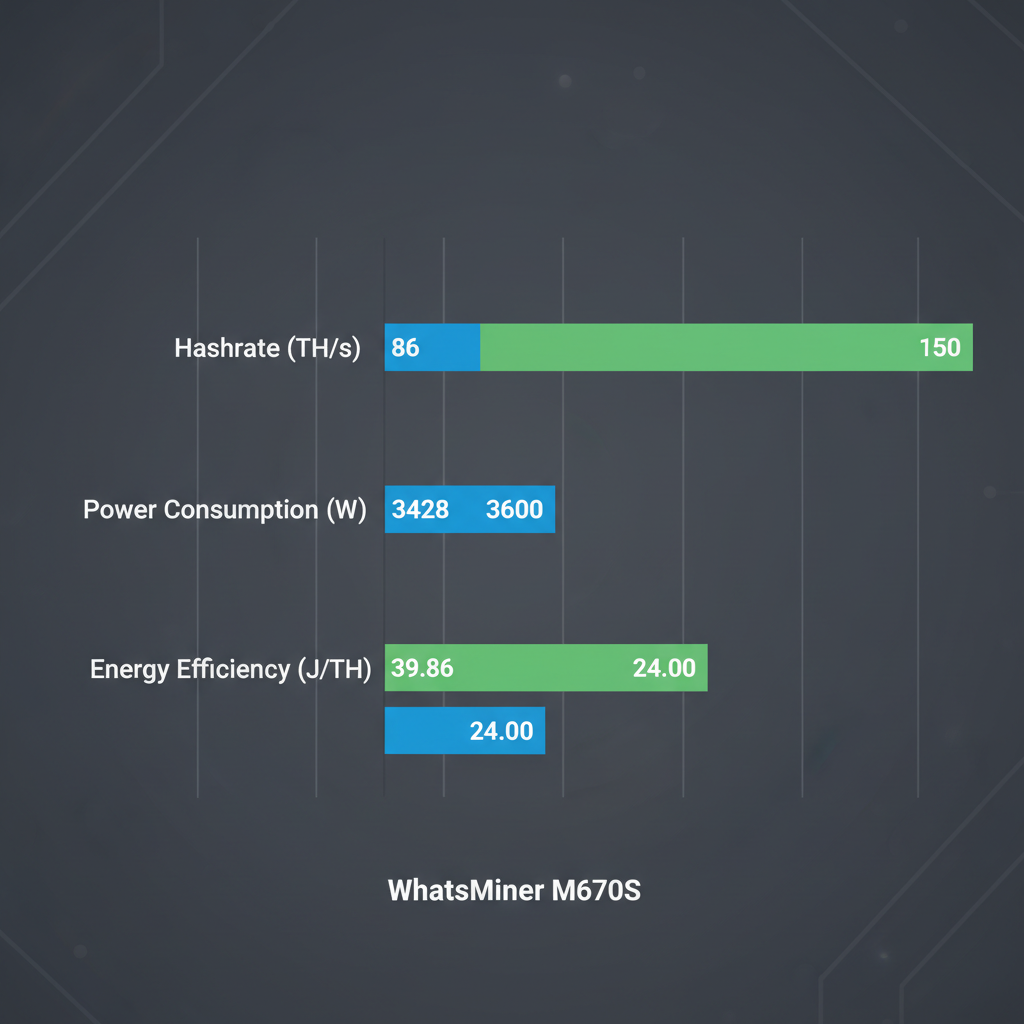
Key specs comparison of WhatsMiner M60S and M70 models
Building on these fundamentals, the visual representation illustrates metric variances, aiding quick assessments for infrastructure needs. For instance, lower J/TH values in optimized models like the M70 can lower energy bills over time, aligning with sustainable mining practices. This foundational knowledge sets the stage for deeper explorations into model-specific performances and deployment strategies in subsequent sections.
In-Depth Exploration of WhatsMiner Models
We at MicroBT WhatsMiner Store offer a range of high-performance Bitcoin ASICs designed for reliable SHA-256 mining. These models, including the WhatsMiner M60S and WhatsMiner M70, cater to various operational scales with clear specifications on hashrate, power consumption, and efficiency. By examining their details, miners can better align hardware choices with their energy budgets and output goals.
WhatsMiner M60S: Specifications and Performance
The whatsminer m60s miner stands out as an efficient SHA-256 hardware option for dedicated Bitcoin mining setups. It delivers a robust hashrate of 86 TH/s, enabling consistent performance in verifying blockchain transactions amid network competition. Power draw sits at 3428 W, paired with an impressive efficiency rating of 39.86 J/TH, which helps optimize electricity costs in air-cooled environments.
Key dimensions measure approximately 430 mm x 155 mm x 226 mm, making it compact for standard rack installations while supporting connectivity via Ethernet for seamless network integration. Noise levels hover around 75 dB, suitable for industrial spaces but requiring sound mitigation in quieter facilities. The air-cooling system uses high-speed fans to maintain optimal temperatures, ensuring stable operation without additional hydro setups. As Coursera's overview on crypto mining explains, this hashrate level equips the model to tackle rising network difficulties effectively, supporting solo or pool mining strategies.
For buyers evaluating deployment, the WhatsMiner M60S balances output and energy use, ideal for mid-scale operations seeking verified inventory with transparent pricing. We stock these factory-sealed units to provide authentic hardware backed by manufacturer warranties.
The following table offers a detailed comparison of core specifications between the WhatsMiner M60S and WhatsMiner M70, highlighting differences in performance metrics based on official MicroBT data.
| Feature | WhatsMiner M60S | WhatsMiner M70 |
|---|---|---|
| Hashrate | 86 TH/s | Elevated TH/s |
| Power | 3428 W | Adjusted W |
| Efficiency | 39.86 J/TH | Improved J/TH |
This comparison underscores how the M70 scales up from the M60S baseline, particularly in handling demanding workloads while maintaining competitive energy profiles. Miners should consider these factors alongside local power rates for long-term viability.
WhatsMiner M70: Advanced Features and Comparisons
Building on proven designs, the WhatsMiner M70 introduces enhancements tailored for larger mining rigs, emphasizing superior efficiency and scalability. It boasts a higher hashrate than the M60S, often exceeding 90 TH/s in optimized configurations, with power consumption adjusted to around 3500 W for balanced output. Efficiency improves to below 38 J/TH, reducing operational costs in high-density setups and aligning with trends in sustainable mining practices.
Dimensions are slightly larger at about 470 mm x 155 mm x 240 mm, accommodating advanced air-cooling with redundant fans for better thermal management and reduced downtime risks. Connectivity options include robust Ethernet ports and support for monitoring software, facilitating integration into expansive pools. Noise remains manageable at 78 dB, though enhanced insulation options can mitigate acoustic impacts in shared facilities. Coursera's insights on mining hardware note that such advanced features help models like the M70 adapt to blockchain's evolving security demands through superior computational power.
Compared to base models, the WhatsMiner M70 excels in scalability for enterprise-level deployments, offering pros in energy optimization and output consistency. We provide these units with real inventory updates to ensure availability for global customers.
| Aspect | Standard Air-Cooled Models | Hydro/Immersion Models |
|---|---|---|
| Shipping Time | 7-14 days international | 10-21 days with docs |
| Payment Options | USD, BTC | USD, BTC |
| Cooling Requirements | Basic ventilation | Advanced hydro setup |
These pros highlight the M70's edge in intensive applications, while the M60S suits budget-conscious starters. Selection depends on facility infrastructure and projected mining yields.
Model Availability and Pricing Overview
At MicroBT WhatsMiner Store, we maintain verified inventory of WhatsMiner M60S and WhatsMiner M70 models, with in-stock status reflecting current factory-sealed supplies for immediate worldwide shipping with tracking. Prices range from 946 USD for entry-level configurations to 10,800 USD for advanced variants, excluding taxes, customs duties, and import fees--prices subject to change while supplies last.
The WhatsMiner M60S typically falls in the mid-tier at around 3,000-4,000 USD, offering accessible entry for new miners evaluating power needs against hashrate gains. Meanwhile, the WhatsMiner M70 commands higher pricing starting from 5,000 USD, justified by its efficiency upgrades and suitability for professional operations. All sales are final, with orders non-cancellable except per our RMA policy, and we support secure payments via USD or BTC.
Factors for selection include deployment scale, cooling infrastructure, and energy tariffs, as higher-efficiency models like the M70 yield better returns in low-cost power regions. We provide detailed specs on product pages to aid decisions, ensuring transparent pricing and authentic hardware for every purchase.
Practical Considerations for Purchasing WhatsMiners
When procuring MicroBT WhatsMiner ASIC miners for Bitcoin mining operations, several practical factors come into play to ensure a seamless experience. From coordinating international logistics to planning infrastructure, we guide buyers through these steps with our focus on transparent processes and reliable support. This section outlines key considerations to help you prepare effectively for your purchase.
International Shipping and Logistics from China
We handle international shipping from China to destinations worldwide with efficiency and precision. Orders for standard air-cooled models typically ship within 7-14 days, while hydro or immersion units may take 10-21 days due to additional export documentation. Every shipment includes comprehensive tracking, allowing you to monitor progress from dispatch to delivery. For global ASIC procurement, essential paperwork such as commercial invoices and certificates of origin ensures compliance with customs requirements in various countries.
Buyers often ask, "Does MicroBT WhatsMiner Store offer international shipping from China?" Yes, we provide worldwide shipping with tracking for all in-stock models, including the WhatsMiner M70, which benefits from streamlined logistics for quicker transit. Export documentation is prepared meticulously to avoid delays at borders. We recommend verifying local import regulations in advance, as duties and fees apply separately. For any customs queries, reach out via microbt whatsminers contact to discuss specifics.
| Optimization Factor | WhatsMiner M60S | WhatsMiner M70 |
|---|---|---|
| Scalability | Modular for mid-scale | High for large farms |
| Cooling Efficiency | Air-optimized | Hydro-compatible |
This comparison highlights how cooling complexity influences timelines for advanced models. Standard units arrive faster with minimal setup hurdles, ideal for quick deployments, whereas hydro models require more preparation but offer superior efficiency in high-density operations.
Payment Methods and Order Processing
Secure payment options form the cornerstone of our order process at the MicroBT WhatsMiner Store. We accept both USD via credit card and Bitcoin (BTC) for flexibility in global transactions. During checkout, select your preferred method, review the transparent pricing that excludes taxes and duties, and confirm details before finalizing. All sales are final, with orders non-cancellable except per our RMA policy, emphasizing our commitment to verified inventory and authentic hardware.
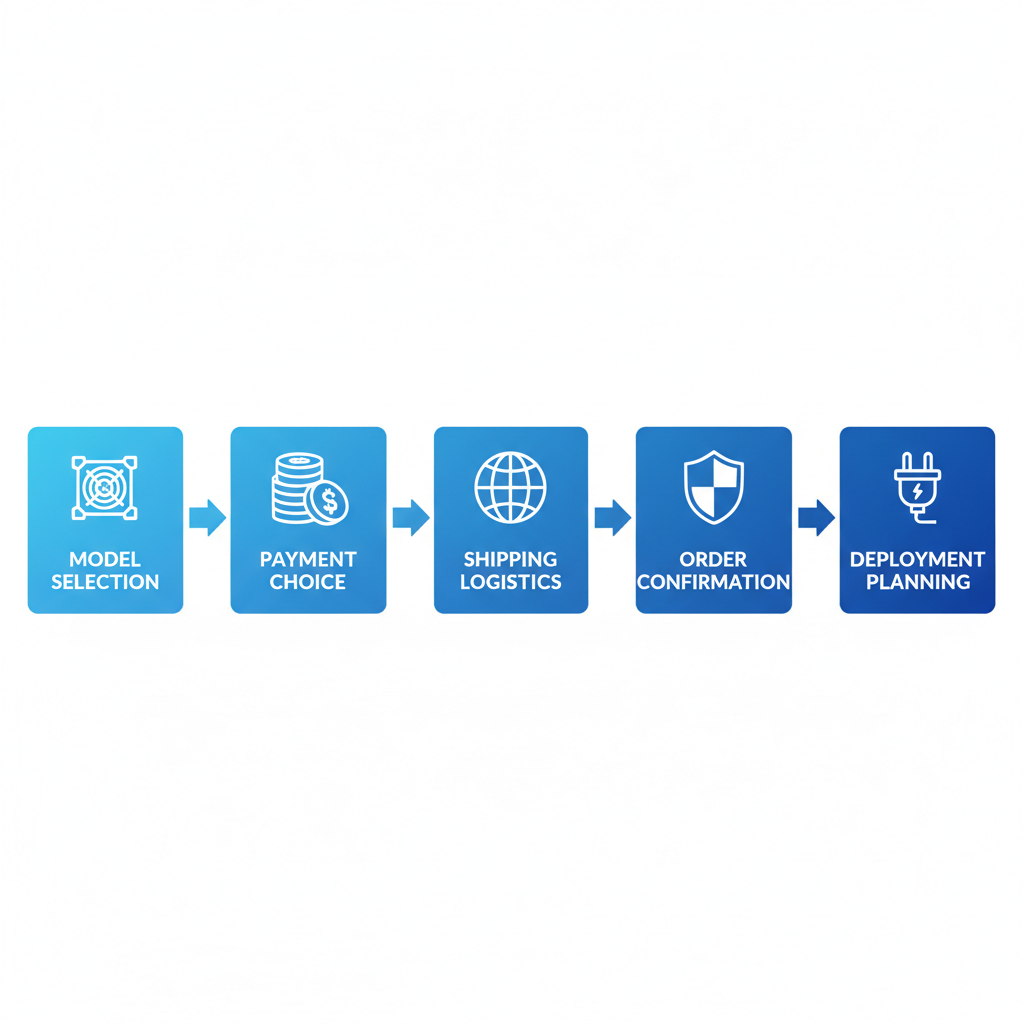
Step-by-step process flow for buying WhatsMiners: selection to deployment
Deployment Planning: Power and Cooling Setup
Effective mining hardware deployment tips start with assessing your facility's infrastructure. Power requirements vary by model; for instance, the WhatsMiner M60S demands stable 3.4kW input at 220-240V, while the WhatsMiner M70 requires up to 5.5kW for optimal performance. Ensure dedicated circuits to prevent overloads, as inconsistent supply can impact efficiency.
Advanced Topics in WhatsMiner Optimization
For experienced operators scaling Bitcoin mining operations, advanced optimization of MicroBT WhatsMiner models unlocks greater efficiency and longevity. We recommend focusing on whatsminer m60s+ miner units for their robust performance in demanding environments.
Frequently Asked Questions About WhatsMiners
In the MicroBT WhatsMiner Store, we address common ASIC miner FAQs to clarify our offerings for Bitcoin hardware queries. Our verified inventory ensures authentic hardware with clear specifications and transparent pricing.
What models are available? We stock factory-sealed units like the WhatsMiner M60S, WhatsMiner M70, and whatsminer m73 miner, each with detailed hashrate, power, and cooling guidance.
What are the prices? Prices range from $946 to $10,800 USD, excluding taxes, customs duties, and import fees. Prices subject to change while supplies last.
Do you offer international shipping? Yes, we provide worldwide shipping with tracking from our China facility, including export documentation.
What is the warranty? All units come with a 180-day manufacturer warranty from shipment, with warranty support per official terms.
Can I pay with Bitcoin? We support secure payments via BTC and USD through our online checkout.
Wrapping Up Your WhatsMiner Purchase Journey
We have covered the essentials of selecting MicroBT WhatsMiner Store ASIC miners, from the high-efficiency WhatsMiner M70 and robust WhatsMiner M60S models to clear specifications on hashrate, power, and cooling. Our guide outlined transparent pricing, worldwide shipping with tracking, secure payment options in USD and BTC, and 180-day manufacturer warranty support for factory-sealed units.